
Collagen Amino Acids in Makeup: Benefits & Facts | PHNX Cosmetics 🐦🔥

COLLAGEN AMINO ACIDS IN MAKEUP: CAN THEY REALLY HELP YOUR SKIN LOOK YOUNGER?
The Beauty Behind the Ingredients | PHNX Cosmetics - Editorial No. 09
Collagen is one of the most talked-about proteins in beauty. But what about the amino acids that help make it?
From collagen supplements to anti-aging serums and skincare-infused makeup, the beauty industry has become fascinated with ingredients associated with maintaining youthful-looking skin.
And for good reason.
Collagen plays an important structural role in our skin, contributing to its strength, support, and firmness.
But here's something that often gets lost in beauty marketing:
Collagen, collagen peptides, and collagen amino acids are not the same thing.
Although these ingredients are related, their structures, functions, and potential cosmetic benefits are different.
So what exactly are collagen amino acids?
Can they help moisturize the skin?
Do they stimulate collagen production?
And why are cosmetic formulators incorporating them into modern makeup, including products like PHNX Vitamin E Lipstick?
At PHNX Cosmetics, we believe beautiful makeup begins with understanding the ingredients behind it.
Let's explore the science behind Collagen Amino Acids and separate the facts from the marketing.
WHAT EXACTLY ARE COLLAGEN AMINO ACIDS?
To understand collagen amino acids, we first need to understand collagen itself.
Collagen is a structural protein naturally found throughout the body, including in the skin, bones, tendons, and connective tissues.
In the skin, collagen is primarily located in the dermis, where it contributes to the structural framework that helps support the skin.
Like other proteins, collagen is made from amino acids.
Amino acids are small molecules that join together to form peptide chains, which can then assemble into proteins.
Collagen contains particularly high proportions of three amino acids:
-
Glycine: The most abundant amino acid in collagen.
-
Proline: An amino acid important to collagen's characteristic structure.
-
Hydroxyproline: A modified amino acid that contributes to the stability of collagen's triple-helix structure.
When collagen is broken down through hydrolysis, it can produce smaller peptides and, with further breakdown, free amino acids.
In cosmetic formulations, an ingredient listed as Collagen Amino Acids generally refers to a mixture of amino acids obtained through the breakdown of collagen.
These amino acids can be used for their skin-conditioning and moisture-related properties.
But they aren't the same as intact collagen.
PHNX BEAUTY FACT: Collagen Amino Acids are individual building blocks or mixtures of building blocks associated with collagen. They do not retain the complete structure of the original collagen protein.
1. WHY IS COLLAGEN SO IMPORTANT FOR SKIN?
Collagen is one of the primary structural proteins in the dermis.
It works alongside other components of the skin's extracellular matrix, including elastin and various molecules that help maintain tissue structure.
Collagen contributes to the skin's strength and support.
As we age, changes in collagen production, organization, and breakdown can contribute to visible changes in the skin.
These changes may include:
-
Fine lines and wrinkles
-
Reduced firmness
-
Changes in skin texture
-
Loss of structural support
External factors also play a role.
In particular, ultraviolet radiation can accelerate processes associated with collagen degradation and premature skin aging.
This is one reason daily sun protection is so important.
However, while collagen is essential to skin structure, applying an ingredient derived from collagen doesn't automatically replenish the collagen found deep within your skin.
That distinction is fundamental to understanding cosmetic ingredient claims.
2. COLLAGEN VS. COLLAGEN PEPTIDES VS. COLLAGEN AMINO ACIDS
These terms are often used interchangeably in beauty marketing, but they refer to different substances.
Collagen
Collagen is a large, complex structural protein.
When incorporated into topical cosmetic formulations, collagen may help condition the skin, form a surface film, and contribute to moisture retention.
However, intact collagen is generally too large to penetrate deeply enough to replace the body's existing dermal collagen.
Collagen Peptides
Collagen peptides are shorter chains of amino acids produced by breaking down collagen.
Their size and properties depend on the manufacturing process.
Some hydrolyzed collagen ingredients can contribute to moisturizing and film-forming properties in cosmetic formulations.
Certain specialized peptides have also been investigated for biological effects, but those findings cannot automatically be applied to every collagen-derived peptide.
Collagen Amino Acids
Collagen Amino Acids are smaller molecules obtained from collagen breakdown.
They can contribute to skin conditioning and may help support the moisturizing properties of a formula.
However, applying Collagen Amino Acids doesn't automatically instruct the skin to produce new collagen.
The key takeaway: All three ingredients are related, but they don't have identical structures or functions.
3. DO COLLAGEN AMINO ACIDS HELP HYDRATE THE SKIN?
This is one of the more relevant reasons amino acids are used in skincare and cosmetics.
Certain amino acids are components of the skin's Natural Moisturizing Factor, commonly abbreviated as NMF.
Natural Moisturizing Factor refers to a mixture of water-attracting substances found within the outermost layer of the skin.
These substances help the skin retain water and maintain flexibility.
Free amino acids are among the components of this system.
When incorporated into a suitable cosmetic formulation, amino acids may contribute to moisture retention and skin conditioning.
This can help support the feeling of softer, more comfortable skin.
However, the performance of any finished product depends on the complete formula.
The presence of Collagen Amino Acids alone doesn't guarantee a measurable improvement in hydration.
PHNX BEAUTY TIP: For a comfortable, hydrated-looking complexion, look for formulas that combine water-binding ingredients with emollients that help soften and smooth the skin's surface.
4. CAN COLLAGEN AMINO ACIDS BOOST COLLAGEN PRODUCTION?
This is one of the biggest misconceptions surrounding collagen-related beauty ingredients.
Because amino acids are building blocks of proteins, it's tempting to assume that applying Collagen Amino Acids directly to the skin will stimulate collagen production.
But skin biology is much more complex.
The body produces collagen through a series of carefully regulated biological processes.
These processes involve gene expression, protein synthesis, enzymatic reactions, and the availability of appropriate nutrients.
Simply applying collagen-derived amino acids to the skin doesn't establish that they will reach the dermis or increase collagen synthesis.
Some amino acids may contribute to skin conditioning at the surface.
But claims that a cosmetic product stimulates collagen production require appropriate scientific evidence.
PHNX BEAUTY FACT: Providing a building block doesn't necessarily activate the biological process that uses it.
5. WHY ARE AMINO ACIDS USED IN SKINCARE?
Amino acids are useful cosmetic ingredients for several reasons.
Depending on the specific amino acid and formulation, they may function as humectants, skin-conditioning agents, or components of systems designed to support a comfortable skin feel.
Moisture Retention
Certain amino acids help attract or retain water.
This can contribute to the moisturizing properties of a cosmetic formulation.
Skin Conditioning
Amino acids may help improve the way a formula feels on the skin.
Their presence can complement other moisturizing and conditioning ingredients.
Formulation Versatility
Amino acids can be incorporated into different cosmetic products, including serums, moisturizers, and makeup formulas.
Their usefulness depends on the specific ingredient and its intended role in the finished product.
The important distinction is that skin-conditioning benefits are not the same as clinically demonstrated collagen stimulation.
6. CAN COLLAGEN AMINO ACIDS HELP WITH FINE LINES?
Fine lines can become more noticeable when the skin is dry or dehydrated.
A well-formulated moisturizing product may temporarily make the skin appear smoother by improving surface hydration.
This is one reason moisturizing ingredients are so valuable in cosmetic products.
However, there is a difference between temporarily improving the appearance of dehydration-related lines and producing lasting structural changes in the skin.
Collagen Amino Acids may contribute to a formula's moisturizing or conditioning properties.
But their inclusion doesn't automatically establish that a product can reduce wrinkles through increased dermal collagen.
PHNX BEAUTY TIP: Before applying foundation or concealer, use a suitable moisturizer and allow it to settle. Well-moisturized skin can help makeup apply more evenly and reduce the appearance of dry patches.
7. ARE COLLAGEN AMINO ACIDS SUITABLE FOR SENSITIVE SKIN?
Amino acids are naturally present in the body and are commonly used in cosmetic formulations.
However, an ingredient's natural presence in skin doesn't guarantee that every product containing it will be suitable for everyone.
Individual sensitivities can occur.
The complete formulation, including preservatives, fragrances, and other ingredients, affects tolerability.
There is also an important sourcing consideration.
Collagen-derived cosmetic ingredients may originate from animal or marine sources.
This means Collagen Amino Acids should not automatically be described as vegan or plant-derived.
If ingredient origin matters to you, look for verified sourcing information from the manufacturer.
For people with allergies or specific ingredient restrictions, checking the full ingredient list and relevant supplier information is particularly important.
8. WHAT'S THE DIFFERENCE BETWEEN COLLAGEN AMINO ACIDS AND HYALURONIC ACID?
Both ingredients may appear in moisturizing skincare products, but they are chemically different.
Hyaluronic Acid is a glycosaminoglycan known for its water-binding properties.
It is widely used in cosmetic formulations to support hydration.
Collagen Amino Acids are amino acids derived from the breakdown of collagen.
Depending on the formulation, they may contribute to moisturizing and skin-conditioning properties.
Neither ingredient automatically replaces the other.
And neither should be described as directly rebuilding dermal collagen without appropriate supporting evidence.
9. WHY ARE COLLAGEN-RELATED INGREDIENTS APPEARING IN MAKEUP?
The relationship between skincare and makeup continues to evolve.
Consumers increasingly want cosmetic products that provide beautiful colour while also considering how the formula feels on the skin.
This has encouraged cosmetic chemists to explore a wider range of conditioning and moisturizing ingredients.
Amino acids are part of that conversation.
They can be incorporated into products designed to balance cosmetic performance with skin comfort.
But the purpose of an ingredient in a makeup formula may differ from its role in a dedicated skincare treatment.
For example, a foundation may be designed primarily for coverage, colour, and wear time.
A lipstick may prioritize pigmentation, glide, and comfort.
A moisturizing ingredient can complement those goals without turning the product into a clinically proven anti-aging treatment.
At PHNX Cosmetics, we believe that understanding these distinctions is essential to making informed beauty choices.
INGREDIENT MYTH VS. FACT
MYTH: Collagen Amino Acids are the same as collagen.
FACT: Collagen is a large structural protein, while Collagen Amino Acids are smaller molecules obtained through its breakdown.
MYTH: Applying Collagen Amino Acids automatically produces new collagen.
FACT: Topical application doesn't establish increased collagen synthesis. Such claims require specific evidence.
MYTH: Collagen Amino Acids have no cosmetic purpose unless they stimulate collagen.
FACT: Amino acids may contribute to moisturizing and skin-conditioning properties.
MYTH: Collagen Amino Acids permanently eliminate wrinkles.
FACT: Moisturizing ingredients may improve the temporary appearance of dehydration-related lines, but permanent wrinkle reduction isn't established by ingredient presence alone.
MYTH: All collagen-derived ingredients are vegan.
FACT: Collagen is commonly sourced from animal or marine materials. Ingredient origin must be verified.
MYTH: More collagen ingredients automatically mean better skincare.
FACT: The complete formulation, concentration, ingredient quality, and supporting evidence determine product performance.
COLLAGEN AMINO ACIDS IN PHNX COSMETICS
At PHNX Cosmetics, we believe beautiful makeup should combine exceptional colour performance with thoughtfully selected, skincare-inspired ingredients.
Our approach has always been about creating makeup that not only looks beautiful but also considers how it feels on your skin.
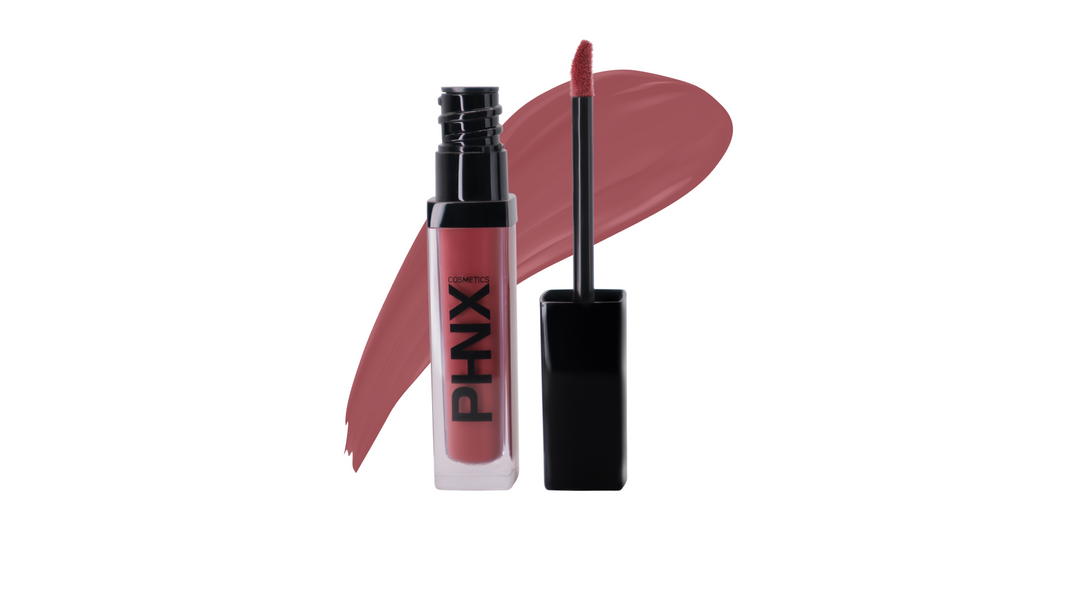
And one product that reflects this philosophy is our PHNX Vitamin E Lipstick.
PHNX Vitamin E Lipstick: Beautiful Colour Meets Skincare-Inspired Ingredients
Your lips deserve just as much attention as the rest of your skincare routine.
Unlike many other areas of the skin, the lips have a relatively thin outer barrier and are particularly susceptible to dryness.
That's why the ingredients in your lipstick matter.
Our PHNX Vitamin E Lipstick is formulated with Collagen Amino Acids, alongside a collection of skincare-inspired ingredients selected to complement its beautiful pigmentation and comfortable texture.
The formulation includes:
-
Collagen Amino Acids: Skin-conditioning ingredients that can contribute to moisture retention and a softer, more comfortable feel.
-
Vitamin E: An antioxidant ingredient commonly used for its skin-conditioning properties.
-
Hyaluronic Acid: A humectant known for its ability to bind water.
-
Ceramide NG: A skin-conditioning lipid associated with the skin's natural barrier structure.
-
Niacinamide: A form of Vitamin B3 widely studied for its role in skin barrier function.
-
Bakuchiol: A botanical compound studied for its potential cosmetic benefits.
-
Peptides: Short chains of amino acids used in various skincare-inspired formulations.
While Collagen Amino Acids should not be confused with ingredients clinically proven to stimulate collagen production, they can contribute to the skin-conditioning properties of a thoughtfully formulated lip product.
Our goal is simple: beautifully lip balm that feels as luxurious as it looks.
PHNX BEAUTY TIP: For a smooth, polished finish, apply PHNX Vitamin E Lipstick to clean, moisturized lips. Build the colour in thin layers for a beautifully even application.
WHY INGREDIENT EDUCATION MATTERS
The beauty industry is filled with exciting innovations.
But it is also filled with terminology that can be confusing.
Collagen, collagen peptides, amino acids, and collagen-boosting ingredients are frequently discussed as though they mean the same thing.
They don't.
Understanding their differences helps us evaluate cosmetic claims more carefully.
And it allows us to appreciate ingredients for the functions they can realistically perform.
At PHNX Cosmetics, we believe ingredient transparency and education are essential parts of modern beauty.
Because a thoughtful formula doesn't need exaggerated promises to be appreciated.
BEAUTY BEGINS WITH UNDERSTANDING
Collagen Amino Acids represent an interesting connection between protein chemistry and cosmetic formulation.
They remind us that ingredients associated with skin structure can have different roles when incorporated into topical products.
While Collagen Amino Acids shouldn't automatically be expected to stimulate collagen production, they may contribute to the moisturizing and conditioning properties of a thoughtfully formulated cosmetic.
And that's a valuable distinction.
At PHNX Cosmetics, we're passionate about creating products that combine beautiful results with thoughtfully selected ingredients.
Our Vitamin E Lipstick reflects that philosophy by incorporating Collagen Amino Acids alongside other skincare-inspired ingredients.
Through The Beauty Behind the Ingredients, we're continuing to explore the science behind modern makeup, one ingredient at a time.
Because beautiful makeup is about more than what you see. It's about understanding the ingredients behind every formulation. ✨
With love,
The PHNX Cosmetics Team
SHOP PHNX COSMETICS
Discover our collection of skincare-inspired, high-performance makeup online or at select retailers across Canada.
Website: www.phnxcosmetics.com
Instagram: @PHNXcosmetics
Clean Beauty. High Performance. Made in Canada.
From the blog
View all




Leave a comment